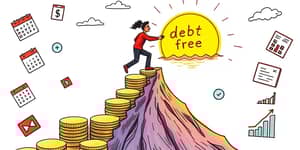
In a world where financial decisions shape our daily lives, access to sound money management knowledge is more essential than ever. Despite digital innovations and growing global connectivity, only a fraction of adults possess the skills needed to navigate budgeting, saving, investing, and debt management with confidence. This article explores the current landscape of financial literacy, underscores the benefits of early education, and outlines a roadmap for building enduring, adaptable financial competence across all stages of life.
Understanding the Financial Literacy Gap
Financial literacy remains elusive for too many. Worldwide, just 33% of adults demonstrate adequate financial knowledge, leaving roughly 3.5 billion people vulnerable to poor money decisions. In high-performing countries such as Denmark, Norway, and Sweden, adult literacy rates exceed 70%, showcasing what is possible when strong educational frameworks exist. In contrast, the United States has plateaued near a 49% literacy rate for nearly a decade, with Americans losing over $1,000 each year due to inadequate financial know-how.
Widening socioeconomic disparities only compound these challenges. In the U.S., individuals with less than a high school diploma have a literacy rate of 30%, compared to 63% for college graduates. Households earning under $25,000 annually sit at a mere 25% literacy rate, while those making over $100,000 achieve 58%. These gaps reinforce cycles of financial fragility and deepen inequality.
- Only 33% of adults globally are financially literate.
- 49% literacy rate among U.S. adults, stagnant for eight years.
- Americans lose an average of $1,015 per year.
- 56% of U.S. adults report financial anxiety.
The Critical Role of Early Education
Introducing financial concepts in childhood and adolescence lays a foundation for lifelong success. Teens who receive comprehensive financial education in high school are 40% less likely to fall behind on credit payments and maintain credit scores roughly 25 points higher than their peers. These lasting benefits to credit and debt behavior endure for at least twelve years, underlining the transformative power of early intervention.
Early education extends its impact beyond students themselves. Parents and teachers absorb these lessons secondhand, sparking conversations about money at home and in the classroom. Encouraging young people to establish basic budgeting, saving, and responsible borrowing habits fosters a culture of shared knowledge and collective advancement.
Lifelong Adaptation: Learning at Every Stage
Financial literacy is not a one-time milestone but a dynamic skill set that must evolve with changing life circumstances. From your first part-time job and college loans to homeownership, retirement planning, and estate management, each phase demands new expertise. Embracing continuous education ensures that individuals can adapt to fluctuating markets, navigate complex financial products, and capitalize on emerging opportunities.
Consider the generational landscape of literacy in the United States:
While older generations maintain moderate literacy, younger cohorts trail behind. Delivering targeted resources for various age groups—from interactive digital modules for Gen Z to seminars tailored to retirees—can close these generational divides and empower individuals at each life stage.
Bridging the Barriers to Financial Knowledge
Several obstacles impede progress toward universal financial competence. A pervasive lack of confidence prevents many from even opening a bank account, with up to 59% in some regions indicating they would need help managing transactions despite having access. The gender gap also looms large: women in several markets are nearly 20 percentage points more likely than men to express hesitation about using financial services independently.
Quality matters. Programs with clear objectives, practical exercises, and ongoing support deliver meaningful outcomes. By contrast, poorly structured curricula produce negligible gains. Addressing cultural attitudes, leveraging psychological insights, and incorporating real-world simulations can transform financial education from daunting to empowering.
Building Effective Programs and Policies
Progress requires coordinated action at individual, institutional, and policy levels. Governments and schools should adopt comprehensive grade-level standards, ensuring every student graduates with core competencies in budgeting, saving, investing, and risk management. Employers can supplement these efforts by offering workplace financial wellness initiatives that cover retirement planning, debt consolidation, and insurance literacy.
- Embed financial education into compulsory school curricula nationwide.
- Leverage digital platforms for accessible, self-paced learning.
- Promote public awareness campaigns to reduce stigma.
Policy momentum is building across states and countries. In the U.S., 23 states are projected to mandate financial education by 2028, while international bodies like the OECD champion standardized measurement and best practices. These shifts signal a brighter future for collective financial well-being.
Empowering Individuals Through Practical Action
While systemic reform is vital, personal initiative holds immense power. Individuals can start by establishing simple, consistent habits: setting aside a fraction of income in a dedicated savings account, tracking monthly expenses with a budgeting app, and consulting reputable sources before making investment decisions. Small steps accumulate into substantial progress over time.
- Create a zero-based budget to assign every dollar a purpose.
- Automate contributions to emergency and retirement accounts.
- Regularly review credit reports and dispute inaccuracies.
Adopting these actionable money management techniques builds confidence and reduces stress. As financial anxiety diminishes, individuals report improved health, stronger relationships, and renewed optimism about their future.
A Shared Responsibility for a Prosperous Future
Achieving widespread financial literacy is a collective undertaking. Educators, policymakers, employers, parents, and learners themselves must collaborate to create an environment that nurtures curiosity, encourages questions, and celebrates progress. By starting early, staying committed, and continuously adapting our approach, we can empower all generations to navigate the evolving financial landscape with confidence and resilience.
Investing in financial education yields dividends that extend far beyond individual bank accounts. It fortifies communities, drives economic growth, and cultivates a culture of informed decision-making. Let us embrace this mission with vigor, knowing that every lesson learned today paves the way for a stronger, more equitable tomorrow.
References
- https://www.cep-dc.org/financial-literacy-statistics/
- https://www.edutopia.org/article/financial-literacy-education-yields-big-returns/
- https://www.tiaa.org/public/institute/about/news/2025-tiaa-institute-gflec-personal-finance-index
- https://cepr.org/voxeu/columns/financial-education-effective-and-efficient
- https://www.nudge-global.com/resources/newsblog/financial-wellbeing-trends/global-financial-wellbeing-report-2025/
- https://www.financialeducatorscouncil.org/impact-of-financial-literacy/
- https://corporate.visa.com/en/sites/visa-economic-empowerment-institute/world-bank-global-findex-2025-insight.html
- https://www.worldbank.org/en/publication/globalfindex
- https://www.brookings.edu/articles/financial-literacy-what-works-how-could-it-be-more-effective/
- https://initiatives.weforum.org/global-future-council-on-financial-education/resources-hub/2025%E2%80%AFtiaa-institute-gflec-personal-finance-index/aJYTG0000000vSv4AI
- https://www.cde.ca.gov/nr/ne/yr23/yr23rel22.asp
- https://gflec.org/initiatives/sp-global-finlit-survey/
- https://excelined.org/2025/03/04/financial-literacy-education-in-the-united-states-landscape-analysis-and-next-steps/