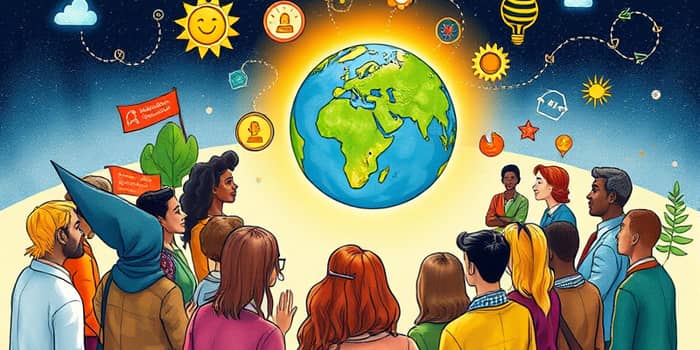
Today, economies everywhere stand at a pivotal moment. Ancient assumptions, once the bedrock of modern market systems, are now under scrutiny. Across continents, scholars, activists, business leaders, and civil society convene to ask: can capitalism evolve to meet our planet’s most urgent needs?
This article synthesizes emerging debates, fresh data, and visionary proposals for an economic system that is both equitable and sustainable growth for all.
Why We Must Rethink Capitalism
Capitalism’s track record includes unprecedented poverty reduction and bursts of innovation. Yet it also reveals stark imbalances. Since 1990, global GDP soared from $26 trillion to $105 trillion in 2023, while the top 1% now hold nearly half of all wealth. Almost 10% of humanity subsists on less than $2.15 per day.
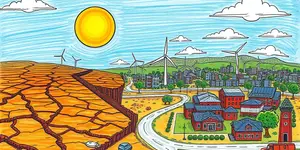
Climate science warns that without deep and rapid transitions, current economic practices will breach safe planetary boundaries. Simultaneously, episodes like the COVID-19 pandemic and resurgent social injustices have exposed capitalism’s blind spots: systemic inequality, threats to democracy, and growing divisions.
By naming these challenges—climate change, health crises, polarized politics, and uneven prosperity—we lay the groundwork for an ambitious global dialogue.
Emerging Frameworks and Models
Reimagining capitalism requires exploring alternative architectures. Scholars and practitioners propose a spectrum of models to correct historical excesses and build new foundations.
Additional concepts such as circular economies and mission-led companies emphasize resource reinvention and purpose-driven strategies. Governments are also reconsidering their roles, from regulating externalities to deploying fiscal policy for social objectives.
Global Voices Leading the Conversation
Across renowned forums, a chorus of voices is shaping this debate. They range from academic thought leaders to grassroots activists, each adding unique insights:
- UNESCO’s Thought Leaders Series featuring Rebecca Henderson calling for a pragmatic system redesign that fuses innovation with justice.
- LSE’s Reimagining Capitalism Lecture Series, where Luis Garicano and Sandra Sequeira dissect inequality and market failures.
- Net Impact virtual forums bridging corporate responses to the digital divide and post-pandemic recovery.
- Georgetown Global Dialogues uniting Global South figures and religious leaders around solidarity and dignity.
- Royal Roads University’s international course comparing economic systems from Oxford to Singapore, guided by Zoë MacLeod.
These gatherings do more than share theories: they drive action plans, policy recommendations, and real-world experiments in local communities.
Debates and Points of Tension
Within these conversations, several fault lines emerge. One central question asks whether incremental reforms—such as ESG metrics and B Corp certification—can remedy capitalism’s built-in biases, or if we need a more foundational shift toward a new economic paradigm.
Opponents of deep change warn that overly prescriptive regulations may stifle innovation. Proponents answer that without robust interventions, market failures will deepen inequality and environmental collapse. This tension between self-regulation and state-led policies remains a defining theme.
Cultural and regional differences add complexity. Policies that thrive in Scandinavia might falter in the Global South. Hence, any global framework must be adaptable and locally informed.
Paths Forward: Calls to Action
While debates unfold, the imperative is clear: transformation requires collective commitment across sectors and borders.
- Elevate marginalized voices by funding community-led economic experiments and indigenous knowledge networks.
- Reform corporate governance to include employee, community, and environmental representation on boards.
- Invest in educational programs—like future-of-capitalism courses—to cultivate next-generation systems thinkers.
- Support policies incentivizing long-term societal value over quarterly returns, including carbon pricing and inclusive tax credits.
- Scale successful prototypes—ranging from urban circular hubs to rural cooperative federations—through global partnerships.
By anchoring reforms in clear metrics such as reduced Gini coefficients, greenhouse gas emission targets, and digital access rates, stakeholders can track progress and hold each other accountable.
Ultimately, steering capitalism toward a more just and sustainable future is a shared endeavor. It demands courage to challenge entrenched interests, creativity to design new institutions, and compassion to ensure no community is left behind.
As Rebecca Henderson reminds us, this is not an abstract academic exercise but a practical mission: to synchronize market dynamism with societal well-being. The path ahead will be neither smooth nor uniform, yet it is within our collective capacity to forge an economy that honors both people and planet.
Join the global dialogue, contribute your voice, and help shape the next chapter of capitalism—one that is truly inclusive, resilient, and visionary.
References
- https://www.unesco.org/en/articles/thought-leaders-series-reimagining-capitalism-rebecca-henderson
- https://www.lse.ac.uk/school-of-public-policy/events/2024-25/Reimagining-Capitalism-Lecture-Series
- https://www.lse.ac.uk/school-of-public-policy/research/reimagining-capitalism-lecture-series
- https://reimaginingcapitalism.org
- https://www.netimpact.org/events/reimagining-capitalism-resources
- https://globaldialogues.georgetown.edu/features/announcing-the-2025-georgetown-global-dialogues-in-rome-and-barcelona
- https://www.royalroads.ca/news/future-capitalism-course-asks-students-take-global-perspectives
- https://www.cauxroundtable.org/2025/04/14/2025-global-dialogue-new-dates-confirmed/
- https://www.youtube.com/watch?v=Om3ALL3cugo