Economic alliances have reshaped global trade landscapes over decades, offering countries new avenues for growth, innovation, and cooperation.
As the world grapples with shifting power dynamics, these blocs are more influential than ever, charting pathways to prosperity and resilience.
Understanding Trade Blocs
At their core, economic blocs represent a coalition of nations united to reduce trade barriers and harness regional strengths. They span a spectrum of integration levels.
- Preferential Trade Areas (PTAs) with limited tariff reductions
- Free Trade Areas (FTAs) featuring elimination of tariffs among members
- Customs Unions combining FTAs and a common external tariff across all members
- Common Markets allowing free movement of goods and people
- Economic Unions pursuing policy harmonization and shared currency adoption
This gradation underpins how deep cooperation can drive efficiencies, align policies, and promote regional cohesion.
Key Players on the Global Stage
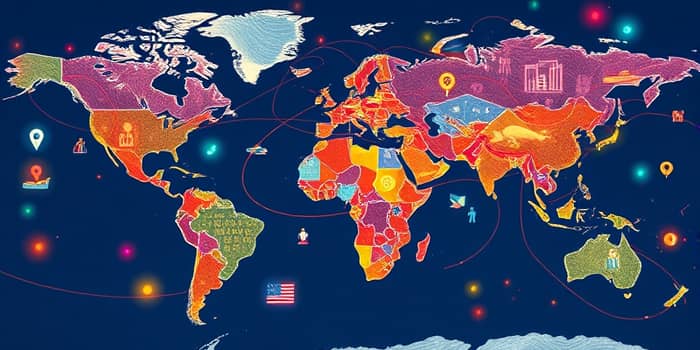
Major blocs now account for over half of global GDP and a similar share of world population. Their combined influence shapes supply chains, diplomatic ties, and market access.
Emerging blocs like the African CFTA hold promise for untapped markets and transformative growth.
Motivations and Drivers
Why do nations pursue these alliances? The answers lie within economic, strategic, and social realms.
- Trade liberalization to spur growth and investment
- Scale advantages and regionalization beyond traditional trade goods
- Geopolitical strategy, enhancing bargaining power on the world stage
- Supply chain resilience against external shocks
These drivers combine to foster environments where businesses thrive and communities benefit from expanded opportunity.
Impacts on Nations and Citizens
Economic blocs bring both rewards and challenges. On one hand, members enjoy increased market access, capital inflows, and labor mobility.
On the other, trade diversion can disadvantage non-members, and smaller economies may struggle with compliance costs or competition.
Yet when managed wisely, these partnerships can promote sustainable growth and poverty reduction goals, create jobs, and spur innovation.
Trends Shaping Tomorrow
Recent years have witnessed a shift toward larger, more inclusive agreements and an expanded agenda beyond tariffs.
- Inclusion of digital platforms and e-commerce rules in modern treaties
- Accelerating integration in Africa with an intra-African trade boost expected by 2035
- Post-Brexit realignments and multi-alignment strategies with the CPTPP
These trends reflect a desire for resilience, sustainability, and alignment with global norms on labor and the environment.
Charting a Path Forward
As policymakers and businesses navigate this evolving landscape, a few guiding principles stand out:
- Prioritize transparent governance structures and inclusive consultation.
- Invest in digital infrastructure to support next-generation trade frameworks.
- Ensure capacity building for smaller economies within each bloc.
By embracing collaboration, innovation, and equity, regions can maximize the benefits of economic blocs while minimizing downsides.
Ultimately, the future of global trade will be written not just by tariffs and quotas, but by our ability to build partnerships that are resilient, forward-looking, and people-centered.
References
- https://www.cypherexim.com/blogs/what_are_the_major_global_trade_blocs_driving_the_economy
- https://www.weforum.org/stories/2023/04/growth-summit-2023-world-biggest-trading-blocs/
- https://www.econinja.net/global-economy/4-4-economic-integration/trading-blocs
- https://www.economicshelp.org/blog/glossary/trading-blocks-pros-and-cons/
- https://analystprep.com/cfa-level-1-exam/economics/trading-blocs/
- https://www.bbvacib.com/insights/news/https-www-bbvacib-com-es-insights-news-what-are-trade-blocs/
- https://fiveable.me/international-economics/unit-12
- https://en.wikipedia.org/wiki/Trade_bloc
- https://www.cliffsnotes.com/study-notes/7138616