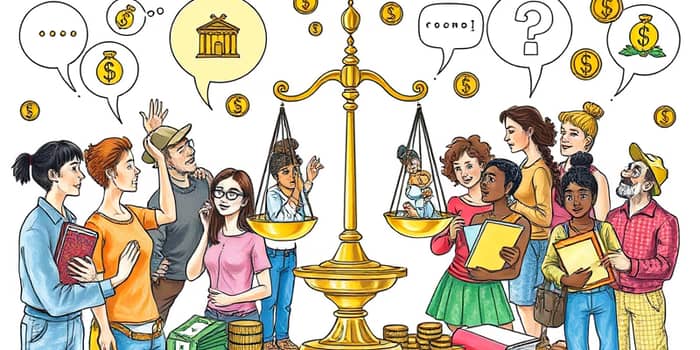
Behavioral finance merges insights from psychology and economics to reveal why our money choices often stray from rational expectations. By examining emotions, biases, and social pressures, we can uncover the hidden forces shaping spending, saving, and investing.
Rather than assuming individuals act like flawless calculators, behavioral finance recognizes that real-world decisions involve emotional influences and cognitive shortcuts. Understanding these drivers empowers us to make more deliberate and effective financial choices.
Traditional vs. Behavioral Finance
Traditional finance models portray investors as perfectly rational, always seeking to maximize utility based on complete information. In contrast, behavioral finance accepts that people often rely on heuristics—mental rules of thumb—and can be swayed by fleeting feelings.
By acknowledging the role of cognitive biases and emotions, behavioral finance offers a more realistic framework. It identifies predictable patterns of error, such as overreacting to losses or clinging to initial reference points.
Common Biases That Skew Decisions
These biases operate automatically, often without our conscious awareness. For instance, people might hold onto a losing investment far longer than they should because the sting of loss outweighs potential gain.
Similarly, during financial downturns, investors may panic and sell at rock-bottom prices, driven by herd behavior rather than a measured assessment of fundamentals.
Core Money Management Behaviors
Understanding key financial behaviors is essential for practical improvement. Researchers categorize them into fundamental actions that shape overall monetary well-being.
- Budgeting: Planning and tracking income versus expenses
- Saving: Consistently setting aside money for goals
- Spending: Making purchase decisions aligned with priorities
- Borrowing: Managing credit cards, loans, and debt responsibly
- Settling Debts: Paying obligations on time to avoid penalties
By evaluating where we excel and where we fall short, we can target specific areas for behavioral change and improvement.
Psychological Factors Influencing Habits
Money habits do not form in isolation. A range of psychological and social factors shape how we handle finances every day.
- Personality Traits: Impulsivity often leads to poor planning and overspending.
- Financial Literacy: Knowledge correlates strongly with better money management (r = .48).
- Attitudes Toward Money: Positive mindsets drive prudent saving and budgeting (r = .66).
- Emotional Responses: Anxiety can trigger credit card overuse or avoidance of investing.
- Social Influences: Parental teaching (r = .43) and peer norms encourage healthy behaviors.
High self-efficacy—believing you can manage your money—boosts budgeting success (r = .26) and overall financial habits (r = .44). Conversely, negative feelings like shame or anxiety create barriers to action.
How Money Habits Form
Many patterns are established in childhood through both explicit instruction and observational learning. Parents who discuss budgets, savings goals, and responsible spending lay a foundation for lifelong behaviors.
Emotional experiences also leave a lasting imprint. A child who witnesses a parental panic-sell during a market drop may develop an aversion to investing, while one who sees calm, consistent saving may adopt that habit.
Practical Tips to Build Better Money Habits
Behavioral science offers proven strategies to counteract biases and reinforce positive routines.
- Automatically transfer funds to savings to overcome inertia and procrastination.
- Break large goals into small milestones to harness momentum.
- Use visual reminders—charts or apps—to keep objectives top of mind.
- Introduce friction to impulse purchases: wait 24 hours before buying.
- Engage social support or accountability partners for motivation.
- Teach children early: model budgeting and open discussions about money.
By implementing these tactics, anyone can reshape their financial behavior, turning intention into consistent practice.
The Road Ahead: Future Trends
As digital platforms and social media evolve, new influences like "finfluencers" and algorithmic nudges are reshaping financial choices. Personalized digital interventions—tailored notifications, gamified savings, and real-time feedback—offer promising directions.
However, technology alone cannot solve deep-seated biases. Financial education and behaviorally informed tools must work in tandem to address the root psychological drivers of spending and saving.
Conclusion
Behavioral finance illuminates why money habits often defy logic, revealing the emotional and social forces at play. Armed with this knowledge, you can identify your own biases and apply targeted strategies to improve your financial life.
By practicing financial mindfulness and intentional decision-making, you not only enhance your monetary outcomes but also foster greater peace of mind. Understanding your behavioral tendencies is the first step toward lasting financial well-being.
References
- https://www.meegle.com/en_us/topics/behavioral-finance/behavioral-finance-and-future-trends
- https://blog.harvardfcu.org/behavioral-economics
- https://www.fe.training/free-resources/portfolio-management/behavioral-finance/
- https://pmc.ncbi.nlm.nih.gov/articles/PMC11326551/
- https://www.indeed.com/career-advice/career-development/behavioral-finance
- https://scholar.stjohns.edu/jga/vol5/iss2/5/
- https://online.mason.wm.edu/blog/what-is-behavioral-finance
- https://www.georgetown.edu/news/this-money-habit-can-revolutionize-your-finances/
- https://www.creighton.edu/academics/blog/what-behavioral-finance
- https://www.consumerfinance.gov/consumer-tools/educator-tools/youth-financial-education/learn/financial-habits-norms/
- https://corporatefinanceinstitute.com/resources/career-map/sell-side/capital-markets/behavioral-finance/
- https://www.apa.org/monitor/2023/06/psychology-of-spending
- https://www.ebsco.com/research-starters/economics/behavioral-finance
- https://michiganross.umich.edu/rtia-articles/new-research-shows-children-form-attitudes-about-money-young-age
- https://www.think2perform.com/why-behavorial-finance-is-important-for-financial-advisors/
- https://www.neuroscienceof.com/branding-blog/behavioral-economics-consumer-behavior-merle-van-den-aaker-interview
- https://www.financialplanningassociation.org/learning/publications/journal/JAN23-untangling-behavioral-finance-and-psychology-financial-planning-OPEN
- https://unisa.edu.au/media-centre/Releases/2025/how-good-money-habits-make-cents-for-mental-health/