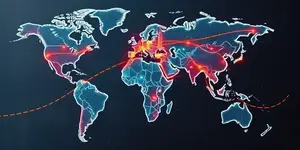
In an era defined by relentless digital transformation, cybersecurity has become a vital component of national strength and economic resilience. As businesses and governments grapple with evolving threats, the stakes have never been higher. Cybercrime is no longer a mere flight risk for data—it constitutes a form of economic warfare reshaping global power dynamics, international relations, and corporate strategy.
Economic Impact of Cybercrime
Global cybercrime damages are projected to reach a staggering $10.5 trillion annually by 2025, up from $6 trillion in 2021 and $3 trillion in 2015. This explosive growth makes cybercrime effectively the third-largest economy if measured as a standalone GDP, rivaling the output of major world powers. Costs encompass everything from the theft of intellectual property and financial data to business disruption, forensic investigation, system cleanup, and long-term reputational harm.
The scale of ransomware alone illustrates the severity of this challenge. In 2015, damages were estimated at $325 million; by 2021, they had ballooned to $20 billion, with forecasts of $265 billion annually by 2031. Meanwhile, the average data breach cost globally reached $4.44 million in 2025, illustrating how even a single incident can cripple organizations financially and operationally.
Key Targets and Vulnerabilities
Certain industries and organizations bear the brunt of these attacks, highlighting critical weaknesses across the digital ecosystem.
- Manufacturing and finance: These sectors account for over a quarter of all breaches, with espionage-motivated intrusions rising dramatically as state-sponsored actors seek intellectual property.
- Healthcare: Outdated systems and the high value of patient data have driven $125 billion in cybersecurity investments between 2020 and 2025, yet breaches persist and patient safety remains at risk.
- Small and midsize businesses: Over half of all cyberattacks target SMBs, and roughly 60% go out of business within six months after a breach due to insufficient defenses and recovery plans.
The expanding attack surface exacerbates these threats. By 2025, the world will store 200 zettabytes of data, and more than 6 billion people will be online. The widespread adoption of IoT, automation, and cloud computing has unlocked new efficiencies but also introduced vulnerabilities where security has not kept pace with digital transformation.
Emerging Attack Methods
Modern cyberattacks leverage advanced technologies and social engineering to bypass defenses. Ransomware now affects organizations of all sizes, with 59% reporting attacks in the past year. Phishing campaigns and deepfake-enabled social engineering are on the rise, exploiting the hybrid work model and remote access infrastructure.
Nation-state and organized crime groups have elevated cybercrime to a form of economic coercion. Their goals range from intellectual property theft and corporate espionage to critical infrastructure sabotage. As malware-as-a-service platforms proliferate on the dark web, even less sophisticated actors can mount devastating campaigns at scale.
Strategic Responses and Building Resilience
Organizations must adopt a multi-layered approach to defend against this new frontier of economic conflict. Embracing automation, artificial intelligence, and machine learning is no longer optional; only automated systems can handle the volume and sophistication of modern threats.
- Implement zero-trust architectures, ensuring that no user or system is inherently trusted, even within the network perimeter.
- Invest in continuous monitoring and threat intelligence, enabling rapid detection and response to anomalies that could signal an attack.
- Strengthen supply chain security by assessing third-party risk and integrating vendors into resilience planning.
- Foster a security-aware culture through regular training, simulated phishing exercises, and clear incident reporting channels.
Regulatory pressures are also driving change. Stringent privacy laws and compliance frameworks increase the costs and consequences of breaches, encouraging organizations to take more proactive measures. Nonetheless, a significant security gap persists between large enterprises able to spend hundreds of millions on defense and smaller entities with far fewer resources.
Public-Private Collaboration and Global Cooperation
Cybersecurity transcends borders, demanding international norms, alliances, and deterrence strategies akin to traditional defense postures. Governments must partner with industry to share threat intelligence, coordinate incident response, and establish legal frameworks that hold perpetrators accountable. With an estimated prosecution rate of just 0.05% in the U.S., enhancing law enforcement capabilities and cross-border collaboration is critical.
Economic warfare is no longer confined to the realm of tariffs and sanctions. It unfolds in the digital shadows where financial systems, critical infrastructure, and personal data become the battleground. As Warren Buffett warned, "Cybercrime is the number one problem with mankind, and cyberattacks a bigger threat to humanity than nuclear weapons." Organizations that recognize this truth and act decisively will emerge more resilient, while those that underestimate the danger risk suffering catastrophic losses.
By viewing cybersecurity as an integral component of economic strategy, leaders can transform risk into an opportunity for innovation and competitive advantage. Continuous investment in cutting-edge defenses, workforce development, and international partnerships will shape a digital landscape where businesses and societies can thrive securely.
In the decades to come, the balance of power may well hinge on the ability to safeguard data, services, and infrastructure against relentless economic aggression. The time to prepare is now.
References
- https://cybersecurityventures.com/hackerpocalypse-cybercrime-report-2016/
- https://www.cobalt.io/blog/top-cybersecurity-statistics-2025
- https://deepstrike.io/blog/cybersecurity-statistics-2025-threats-trends-challenges
- https://www.micromindercs.com/news-announcement/cybersecurity-statistics
- https://www.varonis.com/blog/cybersecurity-statistics
- https://www.crowdstrike.com/en-us/global-threat-report/