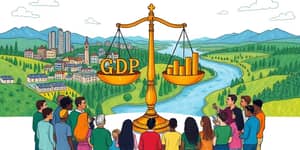
As we stand on the cusp of profound transformation, the year 2025 is a turning point in the trajectory of globalization and economic governance. Mounting geopolitical rivalries, mounting debt burdens, accelerating climate impacts, and entrenched inequalities have converged to demand a new system that is more resilient, inclusive, and fair.
Trade, finance, and security are more entwined than ever, highlighting that economic interdependence is deepening and that old models cannot address emerging threats. If the global community fails to adapt, the stresses on markets, societies, and the environment will only intensify, risking volatility and unrest on a scale unseen since the mid-20th century.
Drivers of Change in Global Governance
At the heart of reform is an intensifying geopolitical tension between major powers. The US-China rivalry extends across technology, trade, and strategic alliances, while conflicts in Europe and the Middle East add unpredictability to markets. Nations increasingly view trade policy as a national security tool, eroding trust in multilateral dispute settlement.
Climate risks serve as both a driver and test of governance. From strained water resources in South Asia to coastal flooding in low-lying nations, climate change is a catalyst for reform that transcends national borders. Trillions of dollars in new investment are needed annually to meet adaptation and clean-energy targets, exposing gaps in the existing financial architecture.
Economic outcomes have diverged sharply within and among nations. Deregulation, capital mobility, and unchecked debt expansion fueled growth in some regions but widened inequalities elsewhere. The result: eroded faith in democratic institutions, a surge in populist movements, and growing resistance to the status quo.
The Mechanics and Structures of Global Economic Governance
Traditional institutions confront a crisis of legitimacy. Both the IMF and World Bank operate under multilateral institutions face credibility crises, as quotas remain skewed toward advanced economies and emerging markets demand greater say. G20 Sherpa meetings and finance ministers’ forums have become battlegrounds for quota realignment and voting reform.
At the same time, the global architecture has fragmented. Regional trade blocs, plurilateral agreements, and ad hoc coalitions—often dubbed “clubs and fences”—proliferate. Countries invoke national security to justify trade barriers, bypassing World Trade Organization norms and fueling uncertainty.
Subsidy-driven industrial policies are back in vogue. Governments worldwide have doubled their support for strategic sectors since 2017, fueling competition in semiconductors, green technologies, and pharmaceuticals. This state-led industrial policy and subsidies era raises questions about market distortion and the risk of retaliatory measures.
Economic Implications
Skyrocketing debt is a ticking time bomb. With public and private obligations now topping global public and private debt at 256% of GDP, refinancing shocks could choke investment and deepen recessions. Fiscal environments are constrained, forcing policymakers to rebuild buffers while safeguarding growth.
Protectionist measures have ripple effects. Broad-based tariffs, export controls, and supply-chain reshoring efforts have emerged as defensive reactions to geopolitical strains. While some measures aim to secure vital inputs, they risk raising prices and disrupting global value chains.
The diverging growth paths of advanced and emerging markets reshape economic leadership. China, despite internal headwinds, remains the largest contributor to global trade expansion, while South–South cooperation offers a complementary network outside IMF-centric safety nets.
Digital transformation and green transitions present both challenges and opportunities. New governance frameworks must address cross-border data flows, digital taxation, and carbon accounting. Well-designed policies can unleash sustainable growth, but half measures risk locking in outdated, high-emission pathways.
Economic restructuring invariably produces winners and losers. Job displacement, regional dislocation, and skills mismatches intensify social cleavages, demanding robust social safety nets and active labor-market strategies to preserve cohesion.
Policy Prospects and Reform Pathways
Achieving meaningful reform requires a blend of ambition and pragmatism. Key proposals include:
- Renewed multilateralism to bridge global asymmetries in voice and voting power.
- Coordinated debt relief and new international taxes to finance climate adaptation and sustainability efforts.
- Quota realignment and capital increases for the IMF, World Bank, and regional development banks.
- Enhanced domestic resource mobilization and deeper regional integration for resilience.
- Development of governance standards for emerging domains like digital services and environmental markets.
Yet formidable obstacles remain: nationalist backlashes, weak institutional capacities, political gridlock, and gaps in coverage—particularly in climate finance and digital regulation. Momentum depends on bridging domestic politics with global needs.
Looking Ahead: Scenarios and Business Implications
Experts paint a spectrum of futures. In an incremental scenario, modest reforms shore up trust but leave key asymmetries intact. In a transformational vision, polycentric governance emerges, characterized by multiple centers of power coordinating on common rules.
- Companies must navigate more complex regulatory landscapes and compliance demands.
- Firms will compete fiercely for subsidies and strategic partnerships, reshaping investment flows.
- Supply-chain resilience and diversification become corporate priorities to mitigate geopolitical and climate risks.
- Digital and green innovation offer new growth frontiers, but require alignment with evolving standards.
For businesses and societies alike, the choice is stark: adapt to a fractured world of selective cooperation or champion a renewed, inclusive order that spreads benefits more equitably. The decisions made today will reverberate for decades.
Conclusion
The global governance landscape is at an inflection point. Converging crises in security, climate, debt, and inequality demand creative, concerted responses. Only by reconciling national interests with collective action can we build a system that fosters growth, stability, and sustainability for all.
As leaders gather in forums from G20 summits to climate conferences, the imperative is clear: embrace bold reforms now or risk a future defined by fragmentation, mistrust, and unequal development. The time for decisive, unified global action is upon us.
References
- https://www.bu.edu/gdp/2024/12/18/five-realistic-goals-for-global-economic-governance-in-2025/
- https://carnegieendowment.org/research/2024/07/global-economic-governance-whats-growth-got-to-do-with-it?lang=en
- https://www.mapfre.com/en/insights/economy/risks-global-economy-2025/
- https://www.whitecase.com/insight-our-thinking/growing-government-influence-shapes-global-business-climate
- https://unctad.org/publication/trade-finance-and-reshaping-global-economy
- https://www.brookings.edu/articles/global-economy-faces-a-conflux-of-change/
- https://www.imf.org/en/publications/weo/issues/2025/07/29/world-economic-outlook-update-july-2025
- https://www.imf.org/en/blogs/articles/2025/10/14/global-economic-outlook-shows-modest-change-amid-policy-shifts-and-complex-forces
- https://www.imf.org/en/publications/weo/issues/2025/10/14/world-economic-outlook-october-2025
- https://www.cippec.org/publicacion/global-governance-in-2050-prospective-scenarios-on-the-future-of-politics/
- https://www.weforum.org/stories/2025/10/uncertainty-impacting-global-economy-how-is-it-measured/
- https://www.piie.com/publications/working-papers/2025/global-economic-governance-and-fight-against-climate-change
- https://globalchallenges.org/global-governance/
- https://www.oecd.org/en/about/news/press-releases/2025/09/global-economic-outlook-weakens-as-policy-uncertainty-weighs-on-demand.html
- https://www.weforum.org/stories/2025/01/5-transformational-trends-shaping-global-finance/
- https://www.spglobal.com/ratings/en/regulatory/article/global-economic-outlook-q4-2025-global-resilience-battles-us-policy-unpredictability-s101647254
- https://academic.oup.com/oxrep/article/40/2/220/7691461
- https://www.ciris.info/learningcenter/global-governance-gaps/