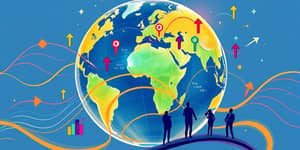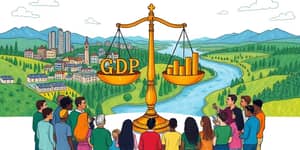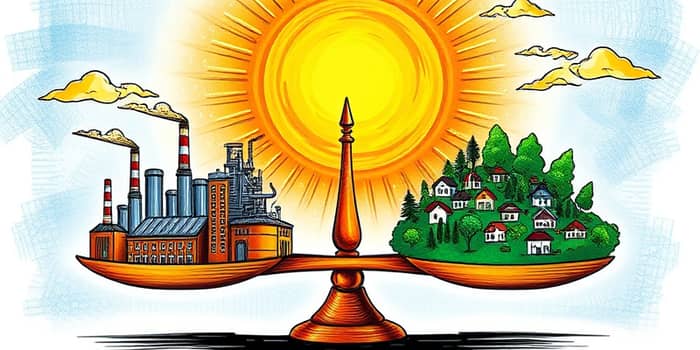
In a world driven by growth statistics and GDP figures, it is easy to forget that every percentage point of progress carries a human and ecological cost. As we push economies forward, the question arises: at what price do we claim victory?
Defining Ethical Economics
Ethical economics is about integrating moral values and principles into the fabric of markets, policy, and corporate culture. It challenges the notion that profit maximization alone defines success.
Unlike mainstream economics, which often treats ethics as an external luxury, this framework demands that every decision consider social justice, environmental stewardship, and collective well-being.
The COVID-19 pandemic exposed the critical importance of social values and highlighted how traditional models fail the most vulnerable in moments of crisis.
The Limits of Standard Economic Models
Mainstream (neoclassical) economics assumes individuals act purely in self-interest and markets self-correct. This leaves an ethical blindspot in models that ignore fairness, virtue, and solidarity.
Pareto efficiency—where no one can be made better off without making someone else worse off—can yield outcomes that are “efficient but perfectly disgusting,” entrenching inequality and suffering.
Such an approach erodes trust, fostering a culture of egoism and opportunism rather than cooperation and shared purpose.
Global Wealth and Income Inequality
Despite unprecedented global wealth, extreme inequality persists. As of 2025, South Africa leads with a Gini of 63.0, while India stands at 25.5, revealing stark disparities.
In the United States, the richest 0.01% saw their income grow by 1,003% since 1979, whereas the bottom 20% rose by only 132%.
Racial and ethnic disparities compound this gap: Black workers earn 24% less than white workers on average, with unemployment rates almost double.
These numbers reveal that economic growth does not guarantee equitable distribution of wealth, nor does it ensure basic wellbeing for all communities.
Ethical Dilemmas and Trade-Offs
Who benefits from progress, and who pays the hidden costs? Rapid industrialization often leaves behind polluted neighborhoods, overworked laborers, and depleted resources.
- Environmental degradation from unchecked expansion
- Worker exploitation in global supply chains
- Resource depletion and biodiversity loss
These social and environmental consequences highlight that growth measured in dollars can mask real human suffering.
Building Trust, Ethics, and Social Capital
Trust and honesty are more than ethical ideals—they are economic assets. High levels of social capital reduce transaction costs and foster collaboration across sectors.
A market devoid of trust cannot operate efficiently or fairly, leading to corruption scandals and compliance failures.
- Transparent corporate governance
- Community engagement initiatives
By investing in ethical behavior, organizations unlock long-term resilience and sustainable partnerships.
Integrating Ethical Values into Policy
Evidence-based ethics draws on tools like the World Values Survey and experimental studies to guide policy toward socially conscious decision-making.
Practical interventions include:
- Progressive taxation and social safety nets
- Environmental regulations and sustainable innovation
- Affirmative action and targeted healthcare access
Countries that adopt these measures report improvements in healthcare outcomes, educational attainment, and overall life satisfaction.
Towards a New Economic Paradigm
Transforming economics means more than adding moral commentary—it calls for structural change in laws, incentives, and cultural norms. Policy must converge on social and ecological well-being, not just financial returns.
Civic participation and social consensus are essential. Ethical economics thrives when citizens engage in dialogue about shared values and collective goals.
By aligning corporate objectives with ecological limits and human dignity, we can forge an economy that serves both planet and people.
Conclusion
The price of unfettered progress is measured in fractured communities, polluted environments, and lives left behind. Ethical economics offers a path to reconcile growth with justice.
Now is the time for policymakers, business leaders, and citizens to embrace a model that values fairness, sustainability, and trust as much as profit. Only then can progress be truly worthy of its name.
References
- https://www.globalpolicyjournal.com/blog/13/04/2021/ethics-and-morals-economy-covid-19-and-learning-past
- https://worldpopulationreview.com/country-rankings/wealth-inequality-by-country
- https://epublications.marquette.edu/econ_workingpapers/102/
- https://inequality.org/facts/income-inequality/
- https://www.imf.org/en/publications/fandd/issues/2018/03/point2
- https://www.visualcapitalist.com/visualizing-global-wealth-inequality/
- https://ethisphere.com/ethics-and-compliance-issues-2025/
- https://wid.world
- https://www.nature.com/articles/s41893-025-01562-4
- https://www.pewresearch.org/global/2025/01/09/economic-inequality-seen-as-major-challenge-around-the-world/
- https://www.weforum.org/stories/2024/01/trust-ethics-economics-governance/
- https://ourworldindata.org/economic-inequality
- https://www.sehn.org/ethical-economics
- https://www.oxfamamerica.org/explore/issues/economic-justice/extreme-inequality-and-poverty/